
AI Doesn't Just Speed Things Up. It Gets Them Started.
The Documented Case as An Accelerant
I think about AI every day in my work at Vulcury Venture Studio and Advisors. One idea I hear often, in the news and in conversation, is that AI is an accelerant. It is, and the research supports that.
In a 2023 field experiment run by researchers from Harvard Business School, Wharton, MIT Sloan and Warwick with Boston Consulting Group, 758 BCG consultants were given realistic consulting tasks. Those with access to GPT-4 completed 12.2% more tasks, worked 25.1% faster and produced results rated more than 40% higher in quality. The gains held only for tasks within the AI's capabilities. On a task outside them, consultants using AI were 19 percentage points less likely to reach the correct answer a pattern the researchers called the "jagged technological frontier."
That was in 2023.
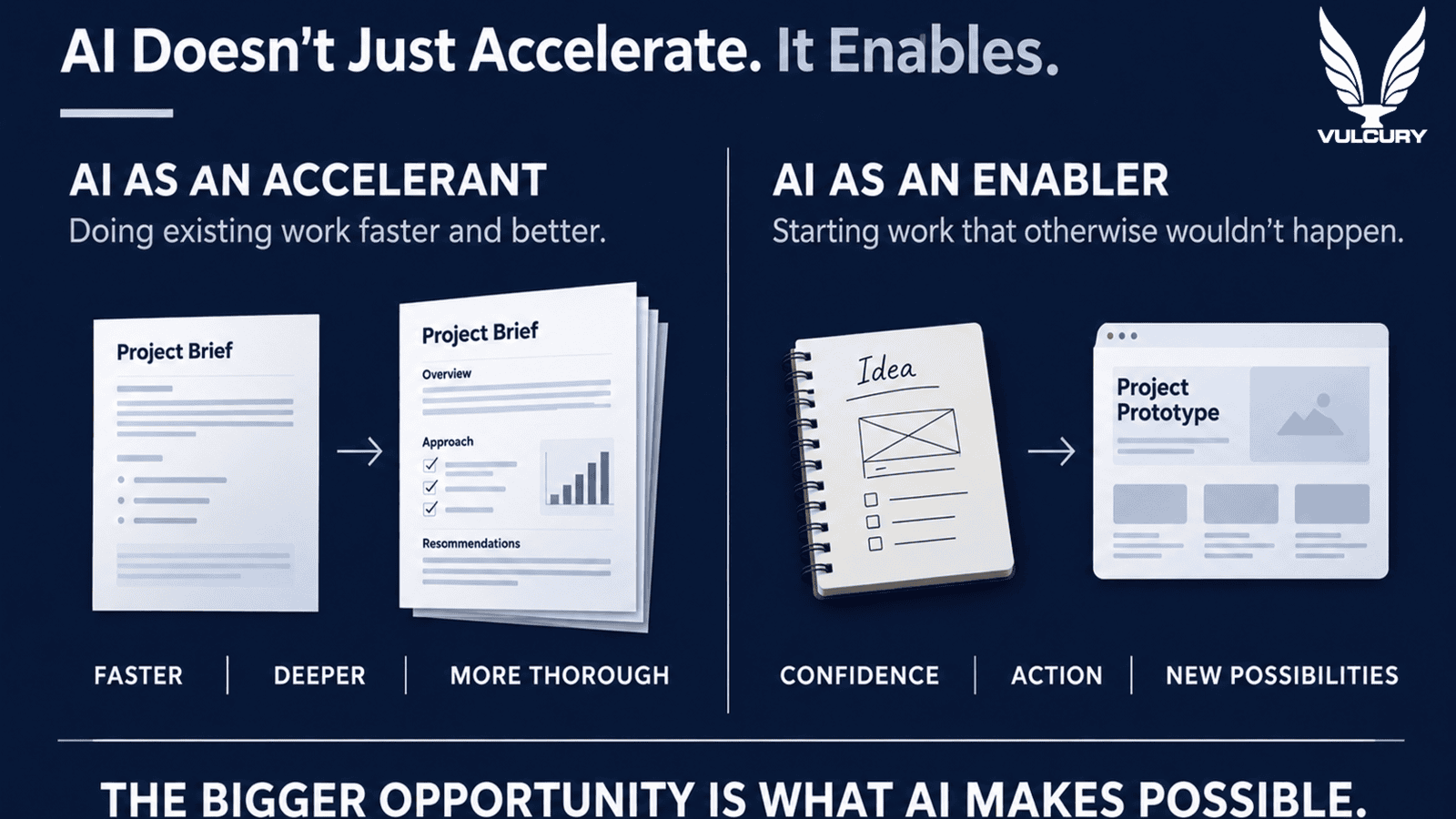
There's an ad today that underscores this point: with AI, you're not getting more of the same, you're getting better of the same. Work becomes deeper and more thorough because AI supports it.
While there is no doubt that AI is an accelerant, I think that view understates the reality and the opportunity. AI doesn't only speed up what people were already doing. It also makes it possible to start things that otherwise wouldn't happen at all.
The backyard pizza oven
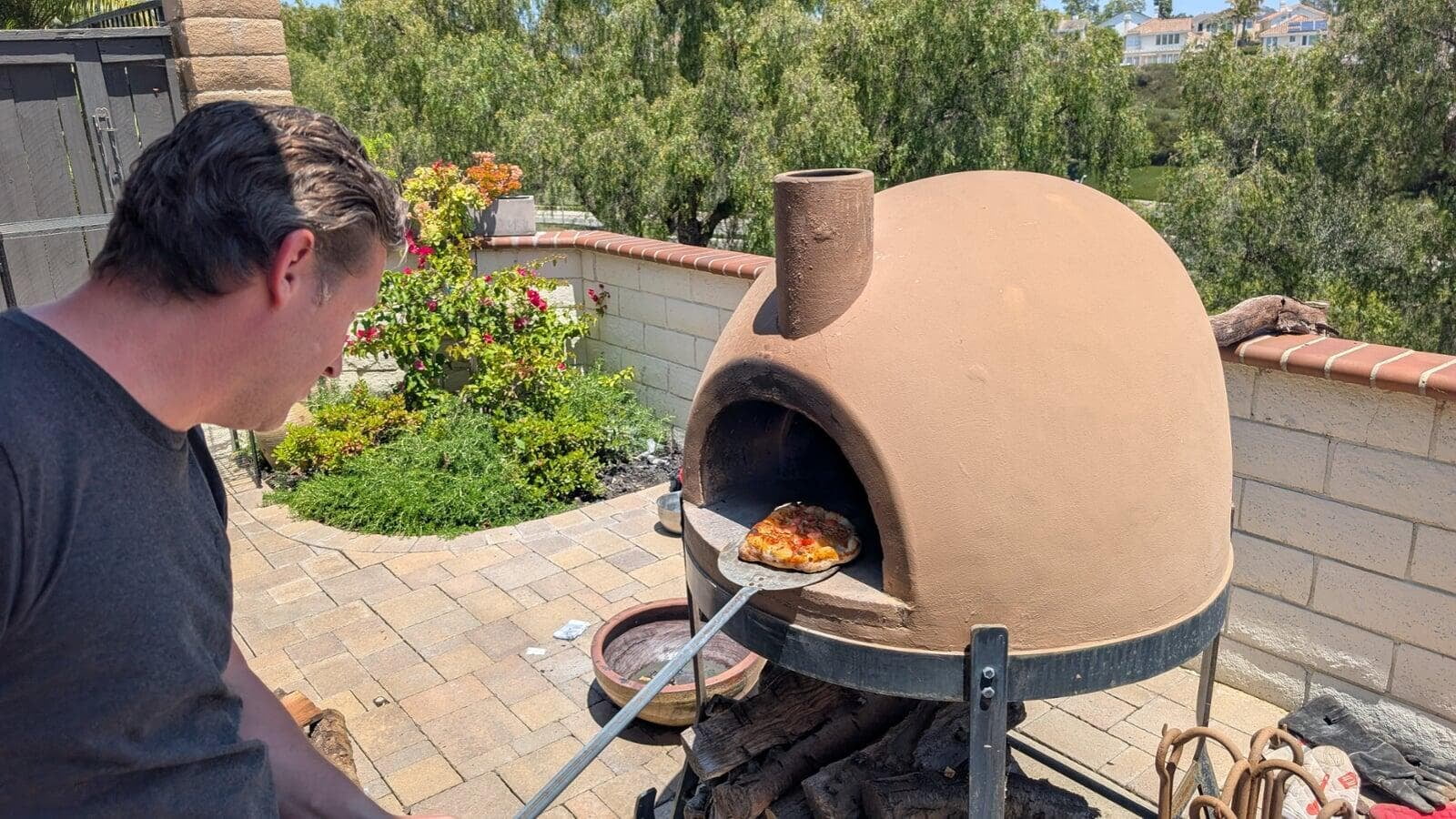
I'll start with an anecdote from the world of home ownership. When we bought our house, it came with a pizza oven. The previous owners told us they weren't moving it because it was too heavy. It might make good pizza, they said, but it was ours now.
I enjoy myself a good pie, but I'm certainly not a pizzaiola by training. It was an open question as to when we'd put this oven to use – or otherwise embrace it as a fairly attractive but aggressively oversized lawn ornament.
Not long ago, the answer to that question would have meant searching online for “wood fired oven pizza making tips” or getting a book from the library, reading up over several days, and then trying it. Getting the fire going and up to temperature, positioning the logs correctly at each step of the process, and cooking a good pizza on the first attempt isn't simple. For a sense of how demanding wood-fired cooking can be, the Associazione Verace Pizza Napoletana, which sets the standard for traditional Neapolitan pizza, calls for a dome temperature of about 485°C (905°F) and a bake of just 60 to 90 seconds. It's reasonable to expect some trial and error.
With the help of Chat GPT, our first attempt worked. In real-time, I photographed progress on the fire, getting feedback on whether the log stack was build correctly, the placement in the fire was correct for the right amount of air at different phases of the process, and that we distributed the full-throated burning logs in the right places to cook. I fired the pies, rotated them around, and arrived at some thoroughly tasty and properly baked first efforts.
There's a lot about this that stands out to me. The fact that I could speak, write, and share photographs in real-time to guide me to an outcome is a miracle. We have “Computer” from Star Trek at our disposal at any hour.
But on reflection, what stands out to me most is that I had enough confidence in AI to even embark on this process at all. In a world where learning how to deliver a good outcome would have required hunting down an internet article or reading a book – then rolling the dice doing it live – the demands of work and family might well have left the pizza oven untouched. There's only so much confidence you can glean from the generic direction of an article – and only so much room for error when flipping back and forth between it and a kindling fire. Why bother when there are lots of other things to do that don’t risk you having wasted the time?
AI was the enabler. Not simply an accelerant – because there's no question it sped up the process. But also the very agent that gave me the willingness and inclination to embark on a challenge – and accomplish it successfully – that I might not have otherwise started.
The same pattern in business
The same concept extends to business. Much of Vulcury exists because of actions taken that might not have been otherwise.
Using AI and achieving tremendous productivity with it is what inspired us to start offering AI enablement services externally.
We might not have built out an international team at all without AI there to provide the necessary understanding of what was required in different jurisdictions quickly – and customized to our needs.
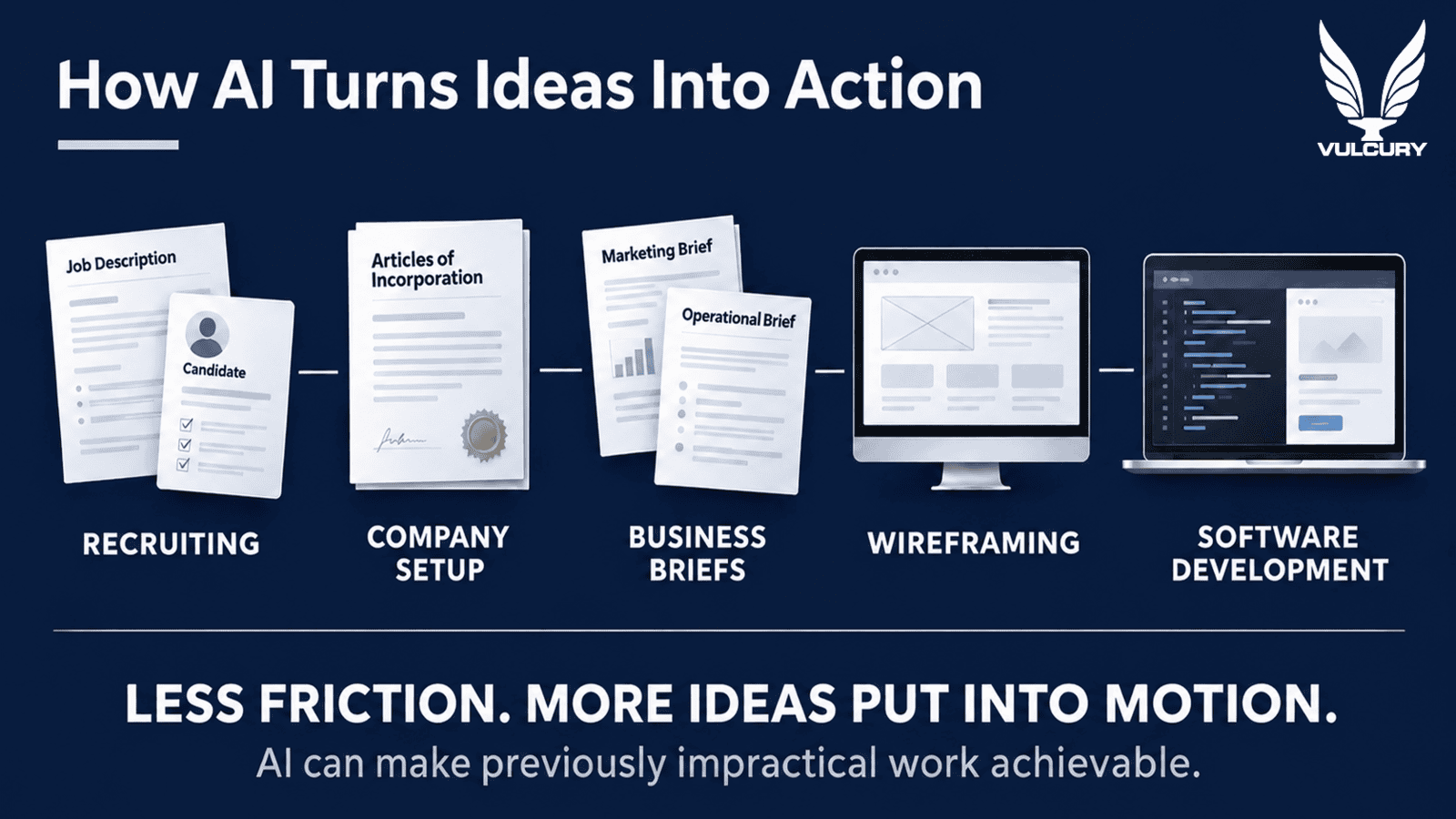
Our ability to generate great functional wireframes has enabled our development team to produce superior product outputs within weeks than what we achieved in months if not years in the 2010s.
From building out a new business offering to posting jobs for HR to refining wireframes for development, AI is critical. And it goes well beyond those functions. Every dimension of our business is directly empowered by AI to not only simply speed up the things we would do, but also enable entirely new actions that we would not have otherwise undertaken in the first place.
The data suggests we’re far from alone in using AI to initiate, not simply streamline. Perhaps no single greater demonstration of this comes in the form of new business creation. Americans filed about 5.7 million applications to start new businesses in 2025, the most in the two decades the Census Bureau has tracked the figure. Speaking to The New York Times, Stripe's chief economist Ernie Tedeschi said, "We think that A.I. is actually assisting people with starting their own business." A Gusto survey, reported by The Economist, found that the share of founders who used AI to help launch their business doubled to 60% between 2023 and 2025.
The immediate takeaway
Whether it be building a fire or building a business, the work we've undertaken is the same sorts of stuff that people have done for millenia. The real question is whether much of it would have even been embarked upon in a world where the associated time and cost to complete it hadn't been shrunk by AI, with its unique ability to provide real-time, personalized guidance.
AI lets people act on ideas they already wanted to pursue but otherwise wouldn't have started at all.
Where is AI showing up for you?
I'd like to hear from you. Where is AI making a difference in your work, if it is? Is it speeding up what you already do, or is it opening doors to things you wouldn't have tried before?
I think the second one is the bigger story. Share your thoughts in the comments.
